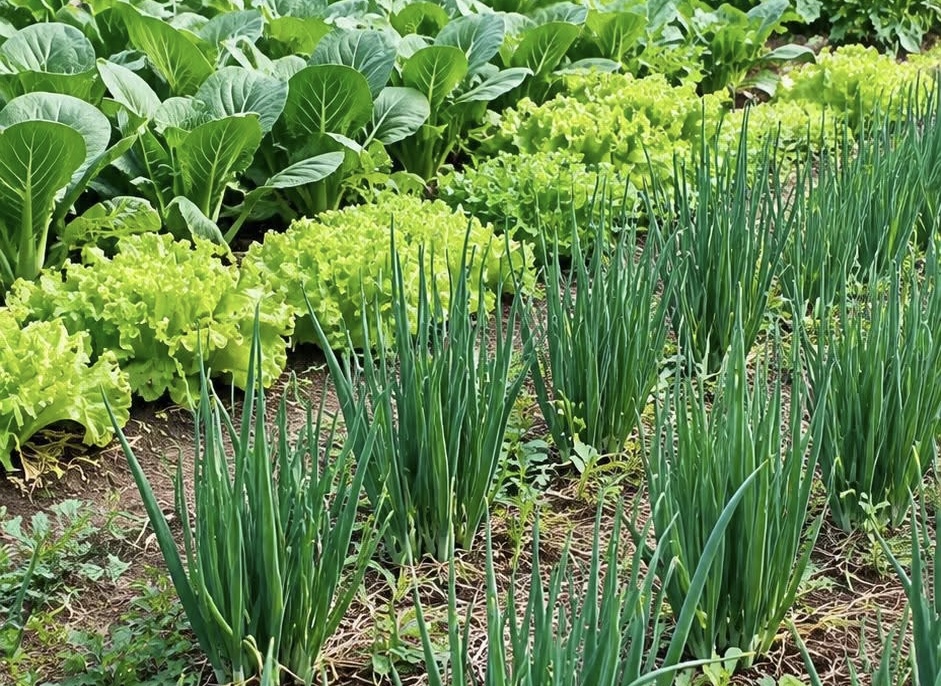
Growing fresh vegetables at home can be surprisingly simple, even if you have only a modest amount of space. A well-planned garden filled with green onions, lettuce, cabbage, and other leafy vegetables can provide fresh ingredients throughout much of the growing season.
With healthy soil, regular watering, good sunlight, and proper spacing, you can create a productive vegetable garden for everyday cooking.
Choosing the Right Location
Most vegetables perform best in an area receiving around 6–8 hours of direct sunlight per day.
Choose a location with good drainage. Soil that remains waterlogged for long periods can contribute to root problems, while extremely dry soil can slow plant growth.
If your garden receives some shade, leafy vegetables such as lettuce may tolerate it better than many fruiting crops.
Preparing the Soil
Healthy soil is one of the foundations of a successful vegetable garden.
Before planting, loosen the soil and incorporate well-decomposed compost or other suitable organic matter. This can improve soil structure, moisture retention, and nutrient availability.
Avoid working soil when it is extremely wet because this can compact it.
How to Grow Green Onions
Green onions, also known as scallions or spring onions, are useful for small gardens because they don’t require much space.
Plant seeds or suitable onion starts in rows, keeping enough space between plants for healthy development. Keep the soil consistently moist during establishment without leaving it saturated.
Depending on the variety and growing conditions, you can harvest green onions while they’re young and tender.
The green tops are excellent in salads, soups, omelets, rice dishes, sauces, and many other recipes.
Growing Lettuce
Lettuce prefers relatively cool conditions and consistent moisture.
Seeds can be planted directly into prepared soil or started separately and transplanted. Give mature plants enough space for air circulation and leaf development.
For leaf lettuce, you can often harvest the outer leaves while allowing the center of the plant to continue growing.
Growing Cabbage and Other Leafy Greens
Cabbage generally needs more room than lettuce or green onions. Space plants according to the recommendations for the particular variety you’re growing.
Regularly inspect the leaves for signs of caterpillars, aphids, or other garden pests. Catching problems early usually makes them easier to manage.
Why Mulching Can Help
A layer of organic mulch around vegetables can help reduce moisture loss and suppress weeds.
Straw, dry leaves, or other appropriate organic materials can work well. Keep thick mulch slightly away from the base of young plants to avoid creating excessively damp conditions around the stems.
Watering Your Vegetable Garden
Deep, consistent watering is generally better than repeatedly wetting only the soil surface.
Water needs vary depending on temperature, rainfall, soil type, and plant maturity. Check the soil rather than following a rigid schedule.
Watering near the base of plants also keeps foliage drier, which may help reduce some disease problems.
Make the Most of a Small Garden
Different vegetables can be planted strategically to maximize available space. Taller climbing plants can grow vertically on supports, while compact vegetables occupy lower areas.
Successive planting can also extend your harvest. Instead of planting all your lettuce or green onions at once, sow smaller amounts periodically when the season allows.
Harvesting Fresh Vegetables
Harvest vegetables when they’re tender and at the appropriate size for the variety.
Leafy greens are often best when harvested during the cooler part of the day. Wash produce thoroughly before eating or cooking it.
Final Thoughts
A productive home vegetable garden doesn’t have to be complicated. Start with good soil, adequate sunlight, reliable watering, and a few vegetables you regularly use in the kitchen.
Green onions, lettuce, cabbage, and other leafy greens can be excellent choices for creating a beautiful and useful garden that provides fresh ingredients straight from the soil to your table.